The "I Don't Know" Moment
To the uninitiated, software development looks like magic. You hire a developer, they type on a keyboard for a few weeks (fueled by caffeine), and poof—an app appears.
But when you are the one paying the bill, the mystery turns into anxiety: "I don't know why this is taking so long" or "I don't know why we can't just change the color."
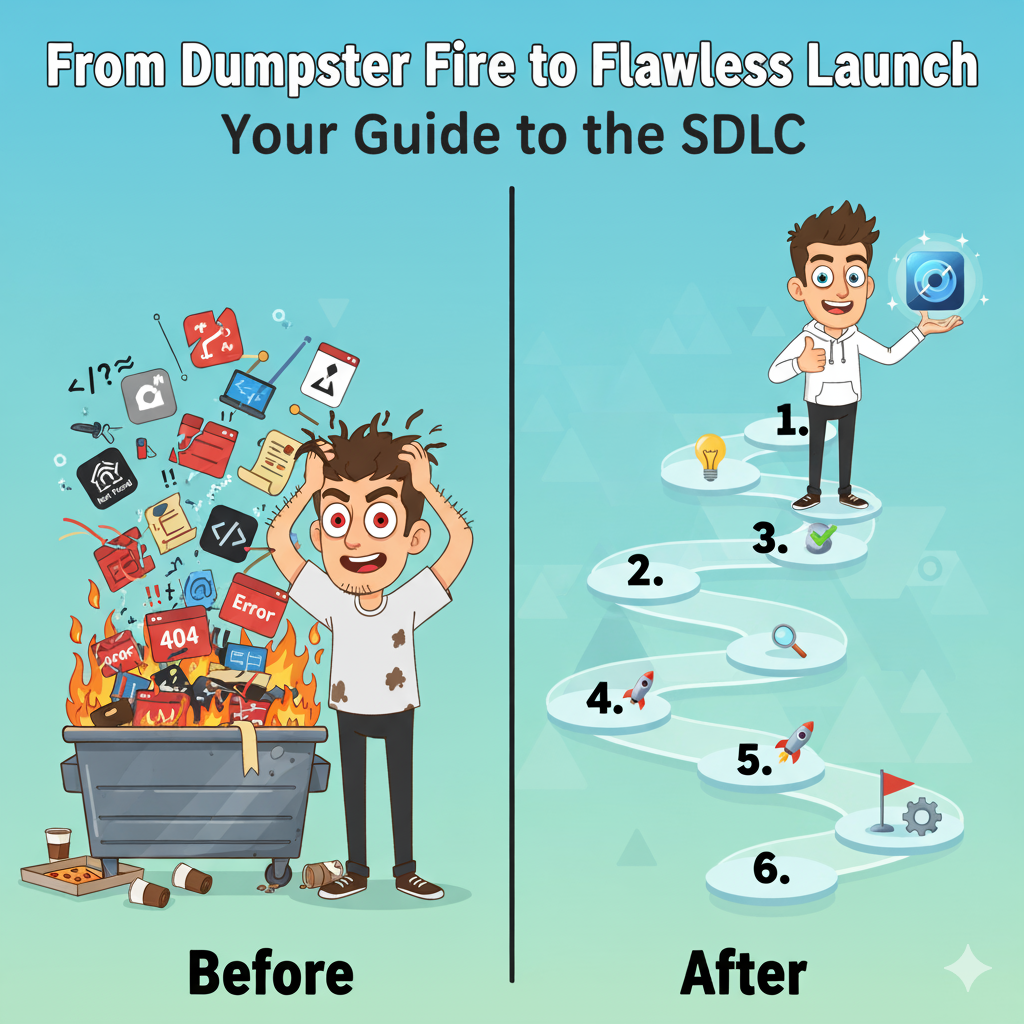
Here is the secret: Building software isn't like microwaving a burrito; it's like cooking a seven-course banquet. It follows a strict recipe called the SDLC (Software Development Life Cycle). Here is how the kitchen actually works.
Phase 1: Planning (The Menu)
- Aka: "What Are We Even Making?"
- This is the "dream" phase. It’s the team huddle where we decide if we are building a simple birdhouse or a skyscraper.
- The Know-How: This step prevents you from being six months into the project before someone asks, "Wait, who is this app actually for?"
Phase 2: Requirements Analysis (The Grocery List)
- Aka: "The Wish-List"
- This is where we become detectives. We interview you to figure out exactly what the software needs to do.
- The Know-How: We write everything down here. So when you say, "I thought the button would be purple," we can gently point to the document that says "Client requested Blue."
Phase 3: Design (The Blueprint)
- Aka: "The Plating Sketch"
- You wouldn't build a house without a blueprint, right? (Please say no.)
- The Know-How: Designers map out the architecture and the look. This is where we make sure the digital "front door" isn't accidentally placed on the roof.
Phase 4: Coding (The Cooking)
- Aka: "The Caffeine-Fueled Part"
- This is the part you see in movies, headphones on, monitors glowing.
- The Know-How: Developers take the pretty blueprints from Phase 3 and turn them into thousands of lines of functional code. It is where the magic (and the bugs) happens.
Phase 5: Testing (The Taste Test)
- Aka: "Try to Break It"
- Time to let our inner saboteur shine!
- The Know-How: The testing team tries to break the app. They click the wrong buttons, type nonsense, and mimic the most chaotic user imaginable. The goal? Find the bad flavors (glitches) before you serve the meal to customers.
Phase 6: Deployment (Service)
- Aka: "Release the Kraken!"
- It's go-time. The software has been planned, prepped, cooked, and tasted.
- The Know-How: We push the big red button and release it to the world. This is the part where everyone holds their breath and prays the servers don't catch fire (spoiler: if we did Phase 1-5 right, they won't).
Phase 7: Maintenance (The Cleanup)
- Aka: "The Pet You Now Own"
- Surprise! Software is never "done." It's like a pet you've adopted.
- The Know-How: You have to feed it (updates), clean up after it (fix new bugs), and teach it new tricks (add features). This ensures your investment stays alive for years.
The Two Kitchen Styles: Agile vs. Waterfall
You don't just "cook"; you pick a style.
Waterfall (The Bakery)
- The Vibe: Strict and linear. You do Phase 1 perfectly, then Phase 2 perfectly, and so on.
- Best For: Projects where the recipe never changes (like building a bridge... or baking a soufflé).
Agile (The Stir-Fry)
- The Vibe: Fast and flexible. Instead of one giant meal, we cook small "tapas" plates every few weeks (called Sprints).
- Best For: Startups who are figuring things out as they go. It lets you taste the food and add more salt (features) while we are still cooking.
The Final Verdict
The SDLC isn't a scary acronym, it's just a common-sense recipe for building great software without the drama.
Whether you want a strict "Waterfall" bakery or a fast "Agile" kitchen, IDK Solutions has the chefs to make it happen. We handle the heat so you can stay out of the kitchen.